
Down here, fall has a way of sneaking up on you. One week you're still running the AC, and the next there's a cold snap that drops in overnight and catches everybody off guard.
Your plumbing's the same way. It coasts through our long summers just fine, then that first cold morning shows up and suddenly a weak spot you never knew about becomes a real problem.
The good news? A little prep now, while it's still mild, saves you a cold-weather headache later. So before the first front blows through, run through this checklist. Most of it takes just a few minutes.
Why Fall Prep Matters in Acadiana
I know what you might be thinking, we're not exactly Minnesota down here. And that's true. But our cold snaps are sneaky in their own way.
We get those quick, hard freezes that show up for a night or two and then disappear. The problem is that our homes and pipes aren't always built for the cold the way northern homes are, so even a short freeze can catch exposed pipes off guard.
Add in that we just don't think about cold-weather plumbing most of the year, and it's easy to get caught flat-footed. A few minutes of prep now is cheap insurance against a burst pipe later.
Section 1: Outdoor Prep (Do This First)
Your outdoor plumbing takes the first hit when temperatures drop, so start here.
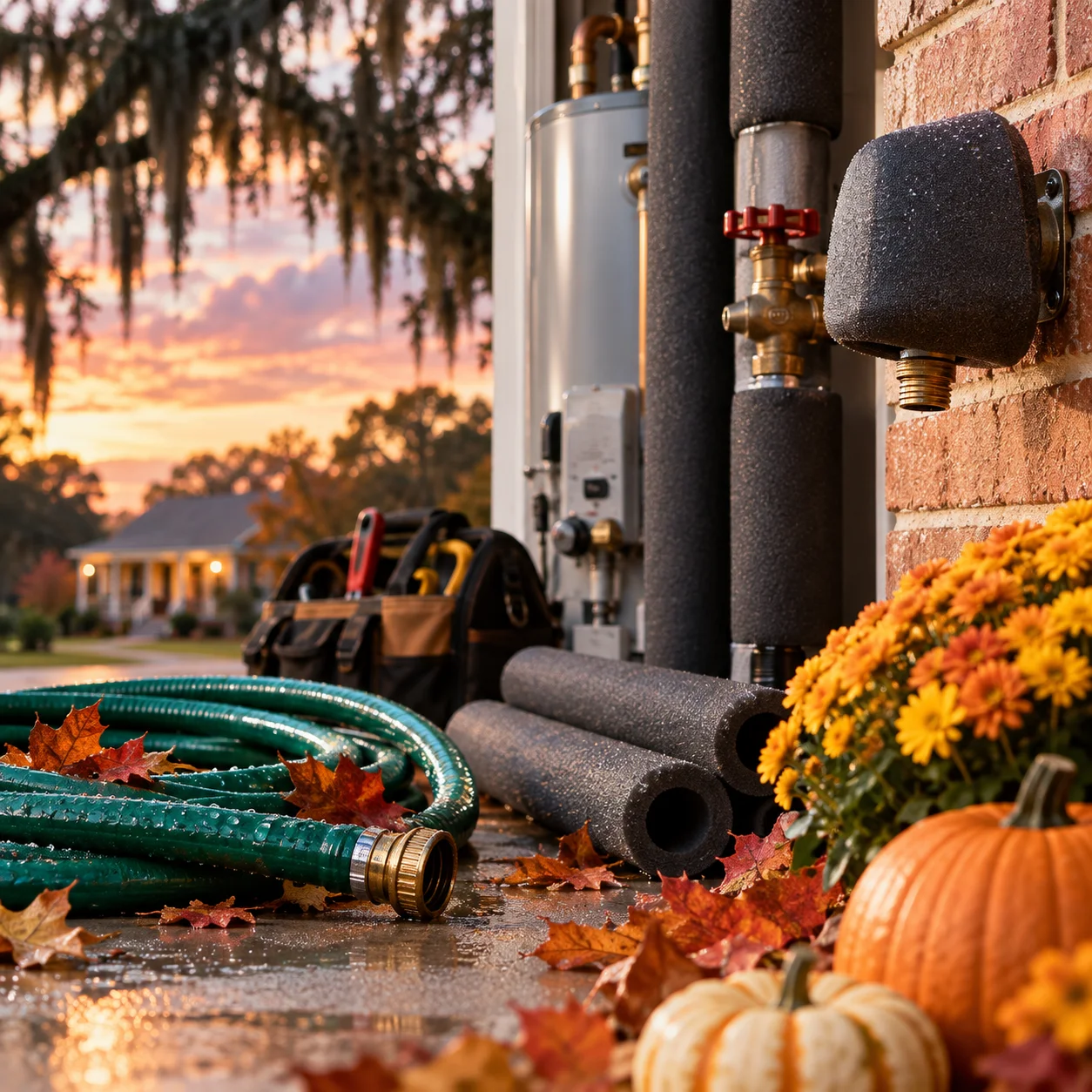
Disconnect and drain your garden hoses. A hose left connected through a freeze can trap water in the spigot, freeze, and crack the pipe right where it enters your house. Unhooking your hoses is the single easiest way to prevent a burst pipe. Do it before the first cold night.
Cover your outdoor faucets. Those little foam faucet covers cost a couple of dollars at any hardware store and add real protection for exposed hose bibs. Cheap peace of mind.
Shut off and drain irrigation systems. If you run a sprinkler system, fall's the time to shut it down and drain the lines so nothing freezes and cracks underground over the winter.
Section 2: Protect Your Pipes
Now think about the pipes that run through the cold parts of your house.
Insulate exposed pipes. Any pipe in an unheated spot, the garage, a crawl space, along an exterior wall, is at risk in a freeze. Foam pipe insulation slips right on and makes a big difference for not much money.
Know where your main shutoff is. If a pipe ever does freeze and burst, the fastest way to limit the damage is to shut off your water right away. Find your main valve now, while it's calm, so you're not hunting for it in an emergency.
Seal up drafts near pipes. Cold air sneaking in through a gap near a pipe is what turns a mild night into a frozen pipe. A little caulk or weatherstripping where cold air gets in goes a long way.
Section 3: Get Your Water Heater Ready
Your water heater's about to start working a lot harder. Cold incoming water means it's got to run more to keep up.
Flush the tank. Fall's a great time to flush out the sediment that's built up over the year. It helps your heater run efficiently right when you're about to lean on it more, and it can buy you back some hot water you've been missing.
Check the temperature setting. Around 120 degrees is the sweet spot for most homes. Hot enough to be comfortable and safe, without wasting energy or scalding anybody.
Listen and look. If your water heater's rumbling, leaking, or just not keeping up, better to deal with it now than on the first cold morning of the year when you really want that hot shower.
Section 4: A Few Inside Checks
Round it out with a quick walk through the house.
Check under your sinks for any slow drips, especially on exterior walls. Test that your drains are running clear so you're not dealing with a backup over the holidays. And if you've got a sump pump, make sure it's working before the rainy fall weather really sets in.
None of this takes long, and all of it beats an emergency call on a freezing night.
You Don't Have to Do It All Alone
Run through what you can on your own, disconnecting hoses, covering faucets, checking under sinks. That's all easy homeowner stuff, and we're glad to put it in your hands.
But if you'd rather have a pro handle the fall checkup, flush the water heater, check your pipe insulation, make sure you're truly ready, that's what we're here for. Better to be ready early than scrambling when the first front hits.
Frequently Asked Questions
When should I do my fall plumbing prep in Louisiana? Aim for late September through October, before the first real cold snap. Our first freezes can show up as early as November, so getting your outdoor faucets and exposed pipes ready while it's still mild means you're covered when the temperature drops unexpectedly.
Do I really need to worry about frozen pipes in South Louisiana? Yes, more than folks think. While we don't get long deep freezes, our quick hard freezes catch a lot of homes off guard, especially since our pipes often aren't insulated for cold the way northern homes are. Exposed outdoor and garage pipes are the most at risk.
What's the most important fall plumbing task? Disconnecting your garden hoses. It's free, takes thirty seconds, and prevents one of the most common cold-weather pipe bursts,water trapped in the spigot freezing and cracking the pipe where it enters your home.
Should I flush my water heater in the fall? It's a great time for it. Flushing clears out the sediment that builds up over the year, which helps your heater run efficiently right as it's about to work harder with colder incoming water. Once a year is the general rule, and fall is a natural time to do it.
Want to make sure you're truly ready for the cold? Contact A 5 Star Plumbing Co. online at a5starplumber.com/contact-us or call us at (337) 202-0246 for a fall plumbing checkup. We'll get your pipes, water heater, and outdoor fixtures ready before the first front hits. We're proud to keep Acadiana homes running right, season after season.
Laissez les bons temps rouler, even when it gets chilly.