

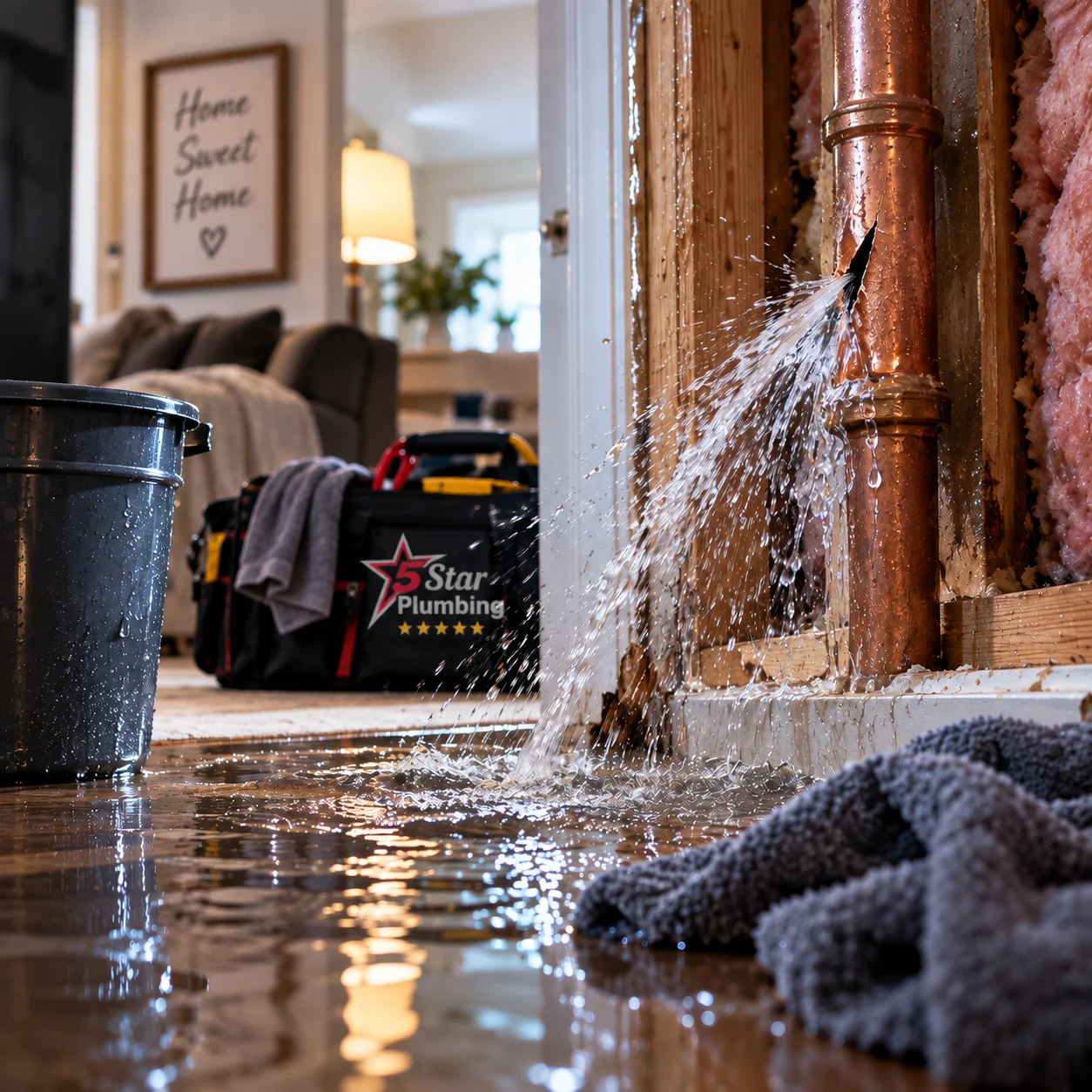
Alright now, if you're reading this with water coming out somewhere it shouldn't be, take a breath. We're gonna walk through exactly what to do, step by step.
A frozen or burst pipe feels like a full-blown disaster, and left alone, it can be. But the truth is, the homeowners who keep their heads and act fast in the first ten minutes save themselves thousands of dollars. That's you, right now.
So let's get to it. We'll cover what to do if a pipe's frozen but hasn't burst yet, what to do if one already let go, and how to make sure this doesn't happen again.
First: Is It Frozen, or Has It Burst?
These are two different situations, so let's sort out which one you've got.
If a pipe is frozen but hasn't burst, you'll usually notice no water (or just a trickle) coming from a faucet on a cold morning. The pipe's blocked with ice but still in one piece. This is your chance to act before it cracks. Frozen pipes burst when the ice expands with nowhere to go.
If a pipe has already burst, you'll know it. Water spraying or pouring out, a soaked wall or ceiling, a sudden drop in water pressure. This one's a move-fast situation.
Either way, the steps below will get you through it.
If Your Pipe Is Frozen (But Not Burst Yet)
Good news, you caught it in time. Here's how to thaw it safely.
Open the faucet that the frozen pipe feeds. As the ice melts, you want the water to have somewhere to go, and running water helps the thawing along.
Apply gentle heat to the frozen section. A hair dryer, a space heater kept at a safe distance, or towels soaked in warm water all work. Start near the faucet and work your way back toward the cold spot.
Never use an open flame. No torch, no propane heater aimed at the pipe. You'll start a fire or crack the pipe. It's not worth it. Gentle, steady heat is what does the job.
If you can't reach the frozen section, or it's inside a wall, that's when to call us. We'd rather thaw it for you than have you come home to a burst.
If Your Pipe Has Already Burst
Okay, this is the move-fast one. Do these in order.
1. Shut off your main water valve immediately. This is the single most important thing. It stops more water from coming into the house. Your main shutoff is usually in the garage, a utility area, or a box near the meter outside. If you only do one thing, do this.
2. Turn off the power to any wet area at the breaker, if you can do it safely. Water and electricity are a dangerous mix. Don't go wading into a flooded room with the power still on.
3. Open faucets to drain the lines. Once the main's off, open the faucets to relieve pressure and drain the remaining water out of the system.
4. Move what you can out of the water's path, furniture, rugs, anything that'll soak up damage. Get it up and out.
5. Call a plumber right away. The faster a pro gets there, the more you save. Water damage gets worse by the hour, and in our humidity, mold sets in fast. Don't wait it out.
6. Take photos before you clean up. Your insurance company will want documentation, and pictures make that claim go a whole lot smoother.
Don't Wait It Out. Here's Why
I want to be real clear on this part, because it's where folks lose the most money.
A burst pipe doesn't dry on its own. The water soaks into your floors, runs down inside your walls, and gets into the framing. What looks like a small wet spot on day one becomes rotted wood and black mold by the end of the week.
Our Louisiana humidity makes it worse,mold loves our climate. So the move is always the same: shut off the water, then call for help right away. Fast action is what keeps a bad day from turning into a months-long repair.
Making Sure This Never Happens Again
Once you're dry and sorted out, a little prevention keeps you from going through this twice.
Disconnect your garden hoses before cold nights. Water trapped in the spigot is the #1 cause of these bursts. Insulate exposed pipes in the garage, crawl space, and along exterior walls. And on a hard-freeze night, let a faucet drip. Moving water is a lot harder to freeze.
We put together a full fall prep checklist that walks through all of this. Catching it ahead of time beats any emergency, every single day of the week.
Frequently Asked Questions
What's the first thing I should do if a pipe bursts? Shut off your main water valve immediately. It's usually in the garage, a utility area, or near the meter outside. Stopping the flow of water is the single most important step to limit damage. Then turn off power to any wet areas at the breaker if it's safe to do so, and call a plumber right away.
Can a frozen pipe thaw on its own? It can, but letting it thaw on its own is risky. As the ice melts and water starts flowing again, a pipe that cracked under the pressure of the ice can suddenly start leaking or spraying. It's safer to thaw it gently and deliberately with the faucet open, so you have control and can catch a problem early.
How do I know if my pipe already burst? The usual signs are water spraying or pooling, a wet or bulging wall or ceiling, a sudden drop in water pressure, or strange sounds in the walls when you run water. If you suspect a burst pipe, shut off your main water valve right away. It's better to be safe than to let it run.
Is a burst pipe covered by homeowners insurance? In many cases, sudden burst-pipe damage is covered, but it depends on your policy, and gradual damage from a leak you ignored often isn't. This is exactly why fast action and photos matter. Document everything before cleanup and check with your insurer, since coverage and procedures vary.
Dealing with a frozen or burst pipe right now? Don't wait, Contact A 5 Star Plumbing Co. online ata5starplumber.com/contact-us or call us at (337) 202-0246. We'll get to you as fast as we can. And if you'd rather prevent the whole situation, we'll happily do a freeze-prep checkup before the cold sets in. We're proud to keep Acadiana homes dry and safe, no matter the season.
Laissez les bons temps rouler, we'll handle the cold-weather curveballs.