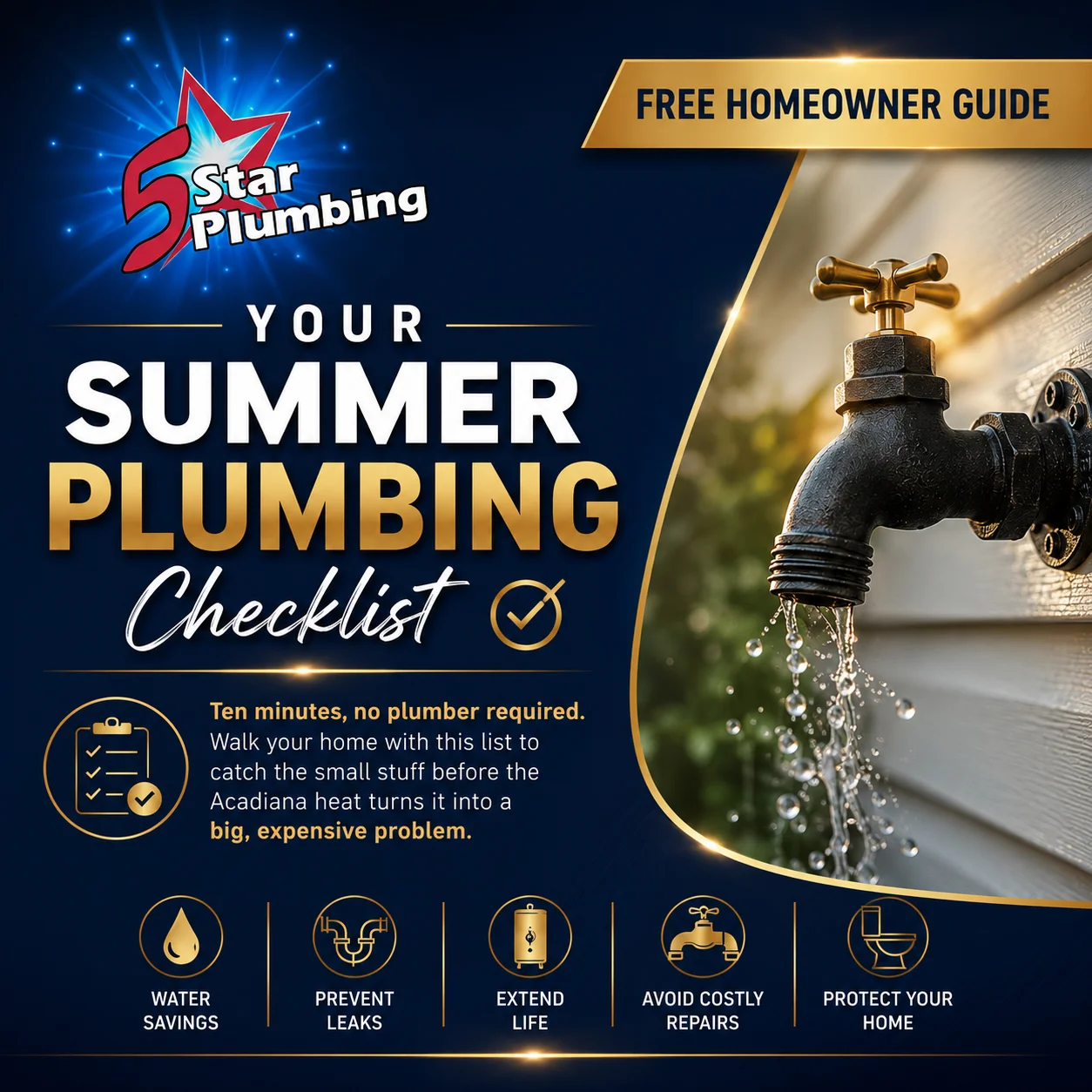
This 10-minute checklist could save you from a $2,000 emergency this summer. Mais, that's not an exaggeration — it's just what happens when small stuff gets ignored through the hot months.
Here's the good news: you don't need to be a plumber to protect your home. You just need ten minutes and this list.
Most of the big, expensive plumbing disasters we get called out for down here didn't start big. They started as a slow drip, a little rumble, a hose that was one summer past its prime. Nobody caught it early, and a $20 problem turned into a flooded laundry room.
So grab a glass of sweet tea, walk your house with us real quick, and let's knock this out together. We'll go room by room, then outside, then hit the appliances that cause the most trouble.
Why Summer Is Hard on Your Plumbing
Before we start checking boxes, here's the why. Summer in Acadiana runs your home's plumbing harder than any other season.
The heat expands your pipes. Everybody's using more water — pools, gardens, extra showers, loads of towels. And the appliances that already work hard get pushed even further when you've got company over every other weekend.
A little attention now is the cheapest insurance you'll ever buy. Let's get to it.
The Indoor Checklist
Start inside where it's cool. This is the stuff folks walk right past every day without ever giving it a look.
Water heater. Listen for popping or rumbling — that's sediment cooking on the bottom of the tank. Check around the base for any moisture or rust. If it's been over a year since a flush, put that on your list.
Under-sink supply lines. Open up the cabinets under every sink and feel around the connections. You're looking for dampness, drips, or that crusty green-and-white buildup that means a slow leak's been going for a while.
Toilet flappers. That little rubber flap inside the tank wears out and causes a toilet to run. Drop a few drops of food coloring in the tank, wait ten minutes, and if color shows up in the bowl without flushing, your flapper's leaking — and quietly running up your water bill.
Slow drains. A drain that's draining slow isn't just annoying. It's usually the early warning sign of a clog that's about to get a whole lot worse. Catch it now while it's a five-minute fix.
The Outdoor Checklist
Now head outside. The Louisiana sun's brutal on anything plumbing-related that lives out in it.
Hose bibs. Turn every outdoor faucet all the way off and watch for drips. Feel around the handle for seeping, too. A worn hose bib can crack and send water right back toward your foundation — and around here, our foundations don't need the extra help.
Irrigation and sprinkler shutoffs. If you run a sprinkler system, do you know where the shutoff is? Run one full cycle and watch for heads that won't pop up or spots that geyser. A busted underground line can run for days before you ever see a soggy patch in the yard.
Outdoor drains. Walk your yard drains and the gutters' downspout areas. Summer storms blow through fast and hard, and clogged outdoor drains send water exactly where you don't want it — usually right up against the house.
The High-Risk Appliances
These three cause more home water damage than just about anything else. They're worth a real look.
Garbage disposal. Summer's the season of cookouts and full sinks. Never send grease, corn husks, or fibrous stuff down there. Run cold water for fifteen seconds before and after you use it, and feed it slow.
Dishwasher connections. Pull the dishwasher out a few inches if you can and check the hose connection underneath and behind it. A slow drip back there can rot your floor for months before you ever notice.
Washing machine hoses. This one's the big one, chère. Failed washing machine hoses are one of the leading causes of serious home water damage in the country. Those rubber hoses get brittle and let go — sometimes while you're not home. If yours are the old black rubber kind, swap them for braided steel hoses. It's a cheap fix that's saved a lot of folks a flooded house.
When to DIY and When to Call
Here's the honest truth — plenty of this list you can handle yourself with ten minutes and a flashlight. Checking for drips, testing a flapper, swapping a washing machine hose. That's all homeowner territory, and we're glad to put that power in your hands.
But some things are worth a pro. If you find an active leak you can't stop, see water where it shouldn't be, or hear that water heater really struggling — that's a call, not a DIY. Same goes for anything behind a wall or under the slab.
There's no shame in calling early. Honestly, the early calls are the easy ones. It's the "I figured it'd be fine" calls that turn into the expensive emergencies. When in doubt, just have somebody take a look.
You Don't Have to Do This Alone
That's really the whole point of this list — to put you back in control of your own home, so summer doesn't sneak up on you.
Run through it once now, maybe again in a month, and you'll catch almost everything before it ever becomes a problem. Ten minutes today beats a flooded kitchen on a holiday weekend, every single time.
Want to understand why the summer heat is so hard on your pipes in the first place? We broke that down over here: 5 Ways Summer Heat Is Secretly Wrecking Your Plumbing.
Ready to make it easy? Drop your email below and we'll send you our free printable Summer Plumbing Checklist — yours to keep. Print it, stick it on the fridge, and walk your house whenever you've got a few minutes. No spam, just a handy list and the occasional seasonal heads-up.
And if anything on this list gave you pause, contact A 5 Star Plumbing Co. online at a5starplumber.com/contact-us or call us at (337) 202-0246. We're proud to keep Acadiana homes running right — one visit at a time.
Laissez les bons temps rouler. We'll keep an eye on the plumbing.