Everyone says tankless is "better." Here's the honest truth. For about a third of the homes we walk into, tankless is actually the wrong call.
I know that's not what you'll hear in most ads. Tankless gets all the hype, and for the right house, it's a great choice. But "right for somebody else" doesn't mean "right for you," and the last thing we want is for you to spend big money on the wrong setup.
So let's sit down and talk it through, plain as day. By the end of this, you'll know exactly which one fits your home, your family, and your budget. No sales pressure, just the straight story.
First, Why This Decision Matters
Your water heater is one of the hardest-working things in your house. It's running every shower, every load of dishes, every bath.
And here in Acadiana, our water's got a fair amount of mineral in it, which is hard on any water heater over time. So whichever way you go, you want to get it right, because you'll be living with this choice for a good ten to twenty years.
There's no universally "best" water heater. There's only the best one for your specific home. Let's figure out which that is.
How a Tank Water Heater Works
This is the one most folks grew up with. A big tank, usually 40 to 50 gallons, keeps a supply of hot water heated up and ready to go.
When you turn on the hot tap, out comes the water that's been sitting there warm. When the tank runs low, it refills and heats back up. Simple, proven, been around forever.
The upside: Tank heaters are cheaper to buy and install. Usually somewhere in the range of $1,200 to $2,500 installed, depending on the unit and your setup. They handle several things running at once just fine, and most plumbers can service them easily.
The downside: They take up space, they run out if everybody showers back to back, and they typically last 8 to 12 years. They also keep heating that water around the clock, even when you're at work or asleep.
How a Tankless Water Heater Works
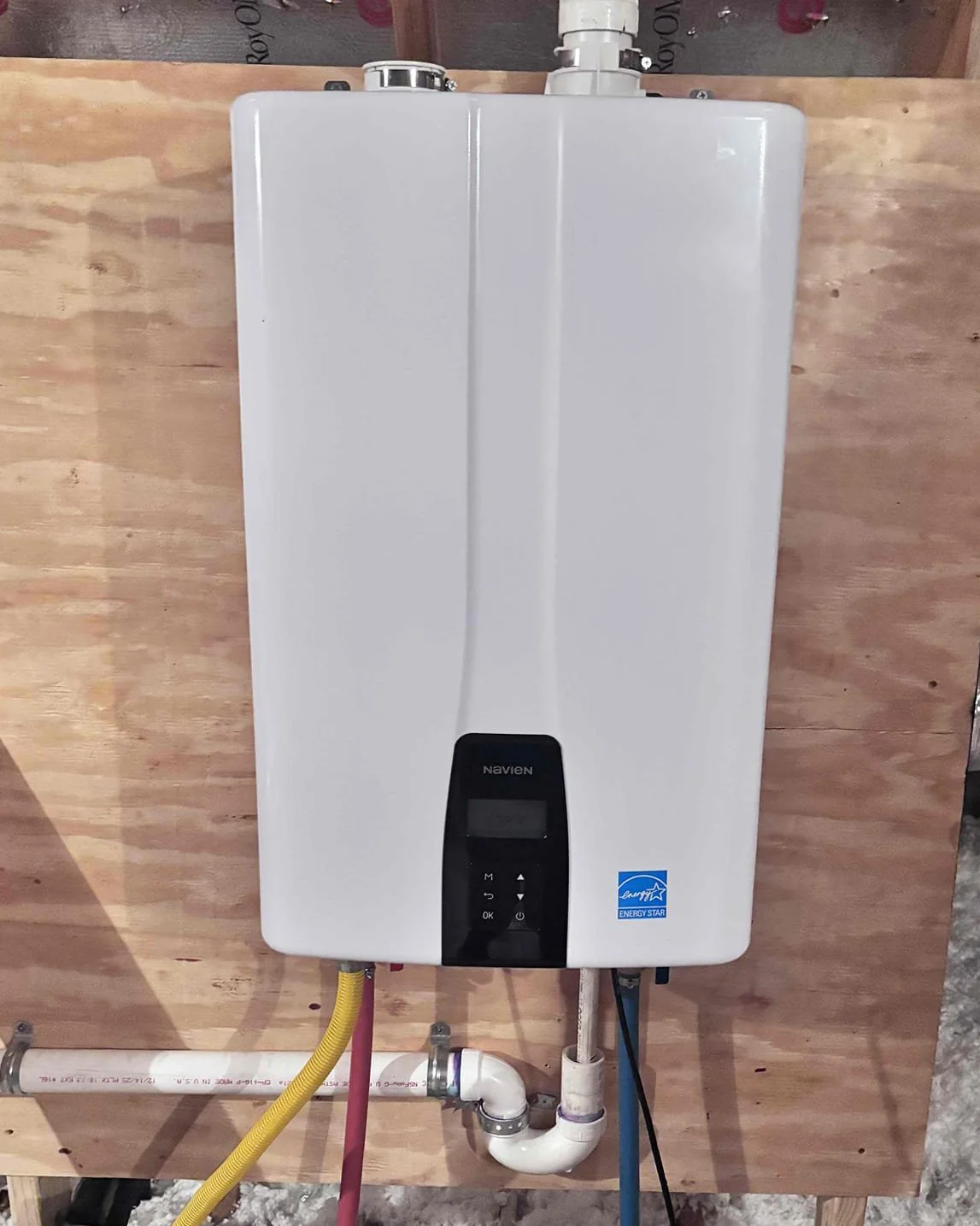
A tankless unit is a different animal. There's no tank holding water. Instead, it heats water on demand, right as it flows through the unit. Hot water whenever you want it, for as long as you want it.
That's the big sell, and it's a real benefit. You'll never run out in the middle of a shower, and the unit only fires up when you actually need hot water, so it's more efficient over time.
The upside: Endless hot water, a smaller footprint on the wall, better energy efficiency, and a longer life, often 15 to 20 years. Over the long haul, that efficiency adds up on your energy bills.
The downside: This is where folks get surprised. Tankless units cost a good bit more upfront, often $3,000 to $5,000 or more installed, because they frequently need upgrades to make them work right.
The Part the Ads Don't Tell You
Here's where that "wrong for a third of homes" comes in. A tankless unit has real requirements, and if your house doesn't meet them, you're looking at extra cost or compromised performance.
Gas line and capacity. A gas tankless unit needs a bigger gas line than a tank heater, plus proper venting. If your home isn't set up for it, that's an added expense to retrofit.
Simultaneous use. Tankless has a limit on how much hot water it can produce at once. If your family runs two showers, the dishwasher, and a load of laundry all at the same time, a single tankless unit can struggle to keep up, and you might need a larger unit or even two.
Electric homes. An electric tankless unit can pull a serious amount of power, sometimes more than an older home's electrical panel can comfortably give. That's another potential upgrade.
None of this means tankless is bad. It just means it's not automatically the right answer, and anybody who tells you it always is hasn't seen your house.
A Simple Way to Decide
Forget the hype for a second. Here's how we actually help folks think it through.
A tank heater is probably your best bet if: you want lower upfront cost, your home's already set up for a tank, your hot water use is pretty normal, or you're replacing a unit and don't want to pay for upgrades. Nothing wrong with a quality tank heater, they work great for a whole lot of families.
A tankless unit is probably worth it if: you've got a big or growing household that runs out of hot water, you're staying in the home long-term and want the energy savings, you're already doing a renovation, or you just hate the idea of ever running out. If endless hot water and long-term efficiency matter most to you, tankless earns its keep.
And honestly? Sometimes the answer is "the same kind you have now, just newer." There's no shame in that. The right choice is the one that fits your real life, not the flashiest one.
We'll Give It to You Straight
Look, we could make more money steering everybody toward the most expensive option. That's just not how we do things.
When we come look at your setup, we'll tell you honestly what makes sense for your home, your gas line, your family size, your budget, your plans. The goal is the right water heater for you, not the biggest invoice for us.
Frequently Asked Questions
How long does a tankless water heater last? A well-maintained tankless unit typically lasts 15 to 20 years. Noticeably longer than a tank heater's 8 to 12 years. That longer lifespan is part of what helps offset the higher upfront cost over time. Just know that our local water means regular descaling matters to hit that full lifespan.
Is a tankless water heater worth the extra cost? It depends on your home and habits. If you've got a large household that runs out of hot water, plan to stay put for years, and want the energy savings, it's often worth it. But for a normal-sized household in a home that's already set up for a tank, a quality tank heater may serve you just as well for far less money.
Can I switch from tank to tankless without major renovation? Sometimes, but not always. Many homes need a larger gas line, new venting, or an electrical upgrade to support a tankless unit, which adds to the cost. The only way to know for sure is to have someone look at your specific setup. That's exactly what a consultation is for.
Which is better for hard water areas like ours? Both tank and tankless are affected by our mineral-heavy water, but tankless units are a bit more sensitive to scale buildup and benefit from regular descaling. A tank heater should be flushed yearly. With either one, a little maintenance goes a long way around here.
Not sure which is right for your home? Book a water heater consultation and we'll give you our honest recommendation, based on your home and your needs, not just the most expensive option. Contact A 5 Star Plumbing Co. online at a5starplumber.com/contact-us or call us at (337) 202-0246.
Laissez les bons temps rouler, with all the hot water you need.